|


Greetings from London, where I just got back from an intense but fun week in smoggy new Delhi. Reflections on all that below, along with the usual things to read.
Hope 2026 started well wherever you are — and enjoy the weekend!
James
 |
This is an occasional private mail for friends and family, with reading recommendations and other things that catch my eye. Feel free to unsubscribe below, if you’d rather not.
11 thoughts on a week in New Delhi
 |
Last week was India / Europe week, as Ursula Von Der Leyen and team came to town to sign a trade deal and try to create a new bloc for the post-Trump moment. A few thoughts.
Points on the board. 2005 was a terrible year for European and Indian foreign policy. Both struggled to cope with the Trump rupture. Given that, it was meaningful to be in Delhi to see both sides put much-needed points on the board, launching their FTA as part of a new kind of geopolitical partnership. My TLDR take on that here for ECFR, along with an emergency podcast.
A multipolar opening. For the last two years, I’ve been writing about the need for more India-Europe cooperation. The strategic logic was compelling, even before recent geopolitical shocks. Trump was then the accelerant that focused minds on why this was a must-do. When your most important partner goes rogue, you start looking for new friends fast.
Both sides moving quickly. It is worth pausing to remember just how remarkable it is to get this FTA done in 9 months. Both the Indian and European systems would happily have taken another 20 years. Speed like this requires serious political will and a shared sense of backs being against the wall.
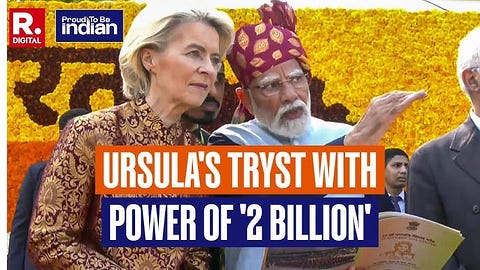
A symbolic moment. At a private dinner in Brussels recently, my friend Garima Mohan made the point that Europeans don’t really understand how big deal it is for von der Leyen to be India’s Republic Day guest, as she was last week. The symbolism is profound, with a TV audience in the hundreds of millions — prime-time politics on a scale most European leaders never experience.
The end of the post-modern world order. There is a bigger story here, namely that Europeans used to believe in what Robert Cooper called a “post-modern world order”. By this he meant a world where military power mattered less, sovereignty was pooled, and trade and rules would bind nations together, replacing the old logic of hard power. It was an appealing vision, but one that is now clearly over.
Europe misread the world. The idea of a post-modern world order was always a mistake. At a basic level, Europe’s vision piggybacked on American power, and military power in particular. It was the US navy that kept sea lanes open, US alliances that deterred aggression, and the US security umbrella that made European welfare states possible. The post-modern order wasn’t post-power; it was just someone else’s power doing the work. No one makes that mistake now, post-Ukraine and post-Trump, as American power goes elsewhere.
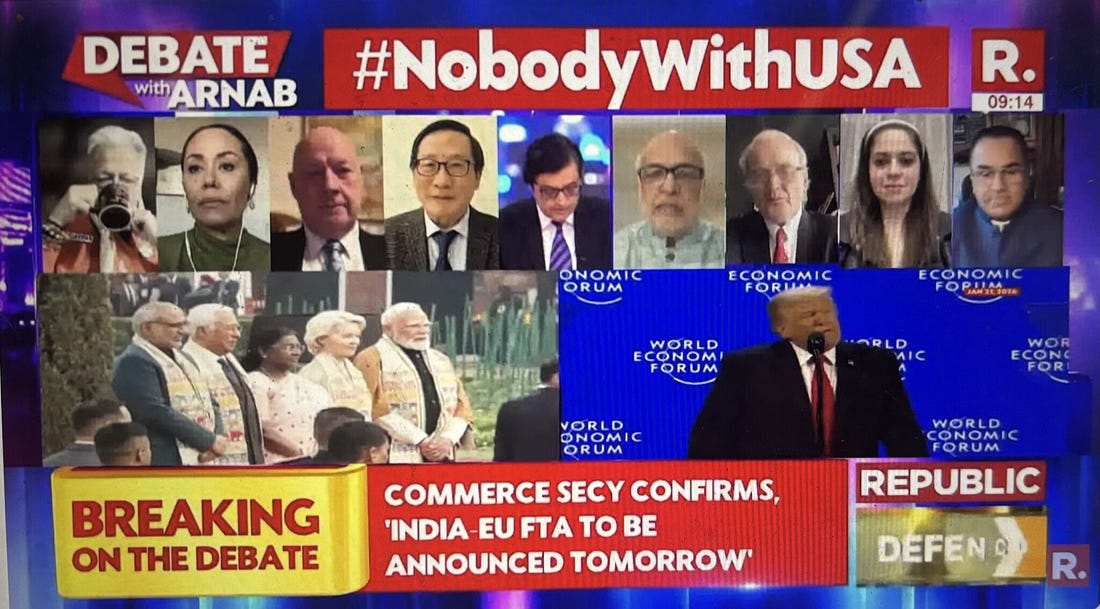
Striking anti-American feeling. America will remain India’s most important partner. A trade deal between Washington and Delhi will likely get done eventually. But there was a striking anti-American feeling during my visit, both in private and very publicly on India’s nationalist TV, as the image above from Arnab Goswami’s rambunctious show demonstrates. The tariffs, the perceived disrespect, Trump’s transactional style — it’s all landing very badly in a country that the US used to want to court above all others.
Plenty of Europe / India challenges. The path forward isn’t going to be easy. The FTA momentum risks getting bogged down bureaucratic quicksand. Deep differences remain on everything from values to climate. European companies remain wary of India’s complex business environment. Indian strategists worry about Europeans making nice with China, as with the UK PM’s trip this week.
Europe’s Achilles heel. Europe has another much bigger disadvantage in all of this, namely its internal divisions. Unitary power matters in geopolitics. In a newly Hobbesian world, it also helps to be a Leviathan. This gives the US, China, Russia, and India clear advantages over Europe and ASEAN, both of which are confederations that must constantly build consensus among members divided by interests and threat perceptions. (This was a good / chastening read this week on the risk of a European “age of humiliation” in Bloomberg.)
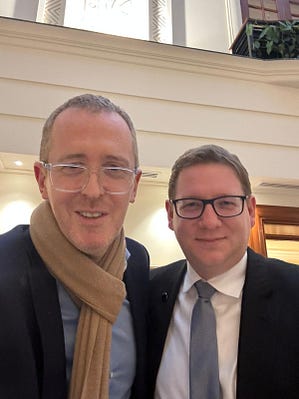
The importance of getting things done. All that said, I was in the Imperial Hotel in Delhi last week with the European team who put the deal together. At a basic level this was just a few dozen senior officials from Brussels, who’d worked long hours to get this over the line. They looked exhausted, and frankly all had a bit of PTSD from having to deal with India and Piyuh Goyal, its famously difficult trade minister. But also happy at having done something important, which was nice to see. (This was me in the hotel with Bjoern Seibert, the President’s chief of staff, and one of the main figures who pushed the deal through. More on him here.)
A moment of tentative geo-strategic optimism. My basic reflection on last week is that this is what a post-American world order can look like — not merely chaos and fragmentation, but also middle and rising powers finding new ways to work together on their own terms, building partnerships that aren’t always mediated through Washington. So, I left Delhi feeling just a tiny bit more optimistic about the future than when I arrived.
You can read my earlier analysis on Europe / India stuff here in Foreign Affairs.
3 essays worth reading
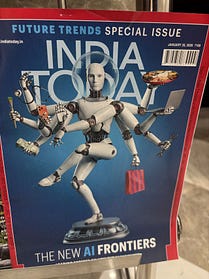 |
The Adolescence of Technology by Daroi Amodei. Long must-read essay on AI risks from Anthropic’s CEO full of not terribly reassuring visions of AI systems going rogue. This includes individuals bent on mass destruction (especially bioweapons) but also the risk of the “misuse of AI for the purpose of wielding or seizing power”.
To take one example:I am concerned that a genius in everyone’s pocket could remove that barrier, essentially making everyone a PhD virologist who can be walked through the process of designing, synthesizing, and releasing a biological weapon step-by-step…. Crucially, this will break the correlation between ability and motive: the disturbed loner who wants to kill people but lacks the discipline or skill to do so will now be elevated to the capability level of the PhD virologist.
The demise of Zhang Youxia hits different by Drew Thompson, my friend and former office mate in Singapore, on last week’s deeply significant purge in Beijing. There has been a lot of excellent analysis of that — cf eg this vg emergency episode on the always superb ChinaTalk pod. But Drew’s piece cut through for its personal reflections on Zhang and what he was like in person.
Mostly, I was rooting for him to survive the purges because I liked him. General Zhang Youxia spent a week in the United States in May 2012 as part of a delegation … I was the Director for China, Taiwan and Mongolia in the Office of the Secretary of Defense, responsible for planning and organizing the delegation’s visit to the United States. I accompanied them on the trip including meetings in the Pentagon and tours of military bases on the East and West coasts. I got to know Zhang Youxia on that trip, and I liked him.
How MI6 works by Sam Freedman, interviewing recently ex “C”, Richard Moore. Super interesting insights into how espionage actually happens.
I think the days of the chief having a regular leather armchair chat with the prime minister of the day are probably long gone. You can see them when you need to. This is a card that all chiefs can play. If you ask to see the prime minister you will be seen. I’m afraid I can’t say what it was about but I can only remember one time where I felt the need to pull that ripcord and I was seen later the same day. So you have the access you need. But I felt very strongly that it wasn’t my job to be shooting the breeze with the PM. He or she has got plenty of people around to do that.
7 things that caught my eye
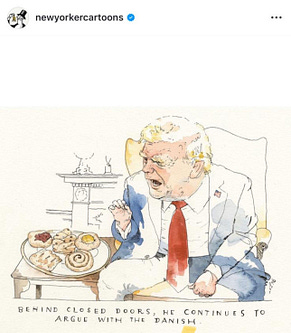 |
The madness of King Donald. He doesn’t seem to be doing too well.
“Robert Fico, one of the few EU leaders to frequently support Trump’s stance on Europe’s weaknesses, was concerned about the U.S. president’s “psychological state,” two of the diplomats said. Fico used the word “dangerous” to describe how the U.S. president came across during their face-to-face meeting at Trump’s Mar-a-Lago estate in Florida on Jan. 17, according to two of the diplomats....”
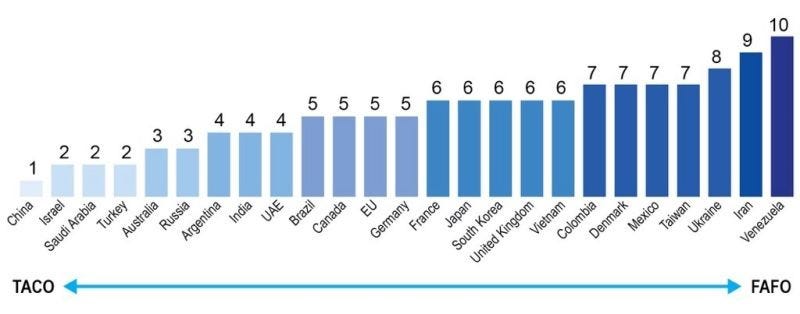
TACO vs FAFO. A fun chart ranking countries on a scale of “Trump always chickens out” to “fuck around and find out”. (h/t Ian Bremmer)
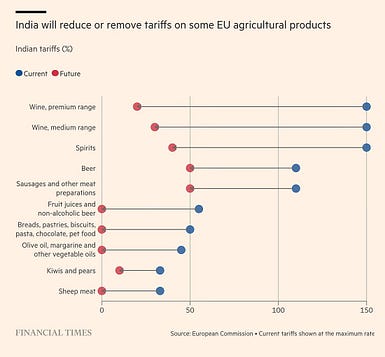
Fear the wurst. It seems sausages are an oddly important component of trade deals.
 |
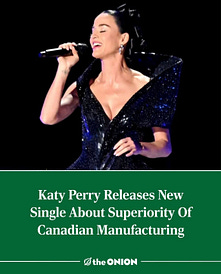
Dating at Davos. This from the Onion made me smile.
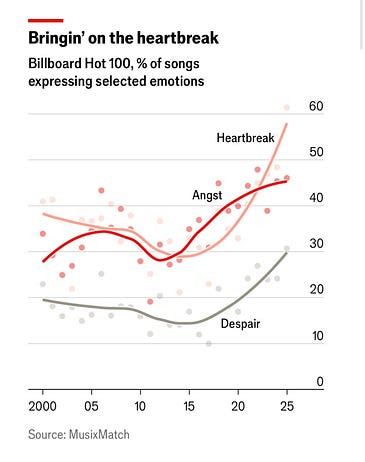
Pop is getting gloomy. The share of hits with lyrics invoking “angst” has increased by 13 percentage points in the past two decades. (h/t The Economist).
In our time 2.0. Lovely discussion as Melvyn Bragg hands over the torch to Misha Glenny, on Britain’s best and most intellectually important radio programme. I like esp the point about how IoT deliberately avoids contemporary relevance — indeed, its motto is meant to be “never knowingly relevant”. It is much the better for it. Good luck, Misha.
Melvyn Bragg meets Misha Glenny
In Our Time
Mark Tully RIP. Getting to know Sir Mark was one of the great pleasures of my time in India. This obituary in the Guardian summed up nicely why he was one of the most important journalists and writers of his generation. My mother also sent me this delightful 1994 programme on great railway journeys, in which Tully traveled from Karachi to the Khyber. May his memory be a blessing.


What I have been up to
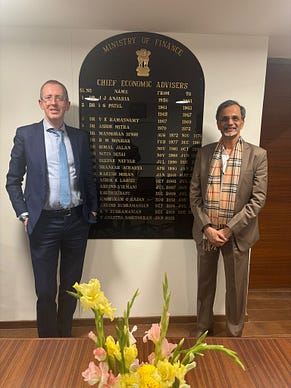 |
Meeting India’s chief economic advisor. The day before his big Economic Survey came out. More on the big ideas in that here.
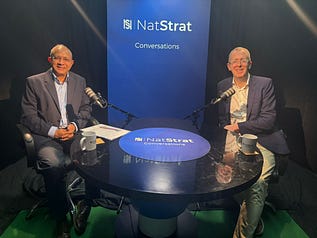
Doing all the things on Europe / India. EG here with Ambassador Pankaj Saran at NatStrat, here with Shashank Mattoo at Hindustan Times, and here with Swasti Rao at India Today.
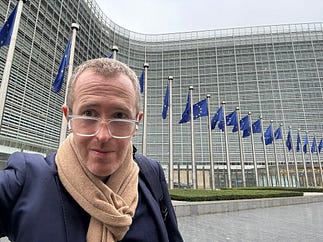
Visiting Brussels. First trip of the year to see the delights of Belgium in the winter, and to catch up with a few old friends.
Plotting a trip to San Francisco. There 3rd week of Feb for social science FOO, and to see if all this AI stuff is going to amount to anything.
ps — I do excellent talks. Also good at moderating events. Drop me a line.
Thanks for reading. If this was forwarded to you, and you’d like to get it in future, feel free to click the blue button. You can also add me on LinkedIn.
| ||||||||||

