
|


Ok, I’ll play… let’s say the US bans diesel exports for 90 days, but before going to the implications let’s rewind a little bit and go a few weeks in time. The conversation surfaced once again some months ago, when the administration through back channels approached the industry for consultations, and those consultations went something like “put more distillates in New York or else…’
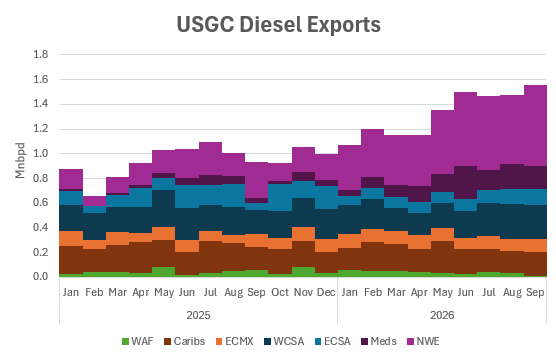 |
US Distillate exports stand at 1.6Mnbpd from the 1Mnbpd baseline, and that would be enough to make someone think refineries are prioritizing the export markets over the domestic market, which holds some degree of truth, but is not the whole story. In aggregate the US and pretty much every refinery in the world (except Russia) is producing more diesel, in fact, US domestic production rose to 5.03Mnbpd, compared with a five-year average of 4.6Mnbpd, but there is always a mismatch in timing (from refinery planning to retail sales) and that mismatch was met with inventories.
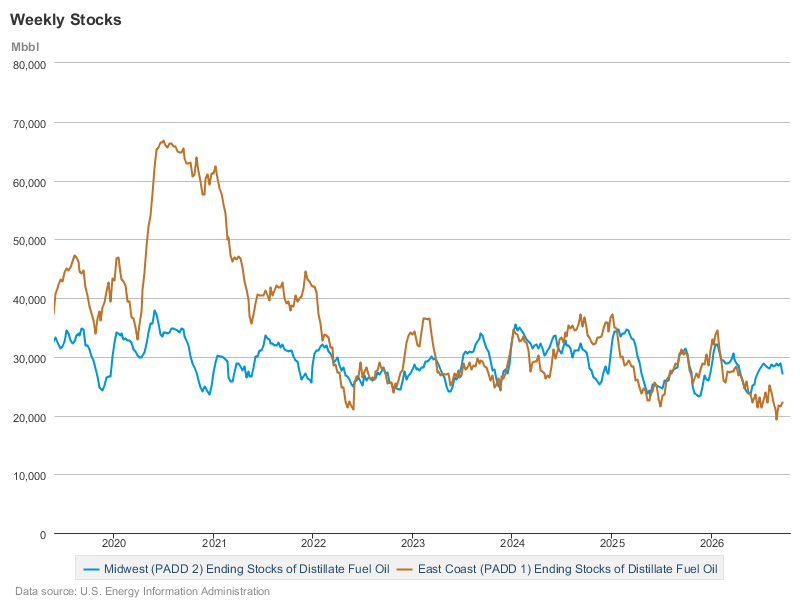 |
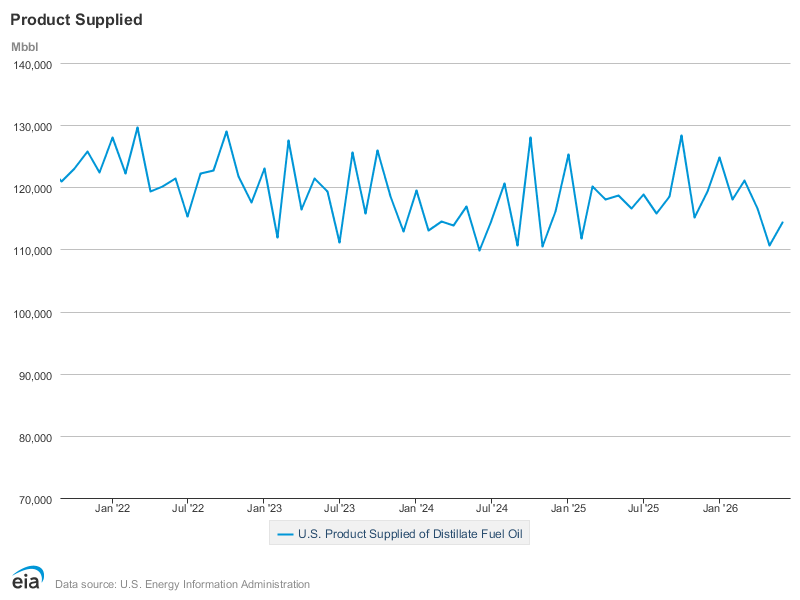
Inventories were ransacked and never got the chance to recover due to seasonality, also, looking at diesel products supplied (domestic production + imports) though is on the lower tier of the historical range, doesn’t show a market that is vastly undersupplied, that doesn’t explain the $6.5 at the pump.
 |
-“Diesel is at an all-time high, what you mean is not undersupplied?”
-New York tanks are undersupplied, and that happens to be the marker that the US prices its domestic diesel from (one of the many, but the most important). Those inventories are low because of the extreme backwardation in the futures curve; it doesn’t make sense to hold inventories in this market, and that backwardation is explained in part by the implicit storage cost, which in the case of a net importer region like PADD1, an MR tanker is your storage. Factor in the freight cost, the financing cost of having barrels floating for 15 days from the nearest supply source (USGC) and you can explain those $5/bbl.
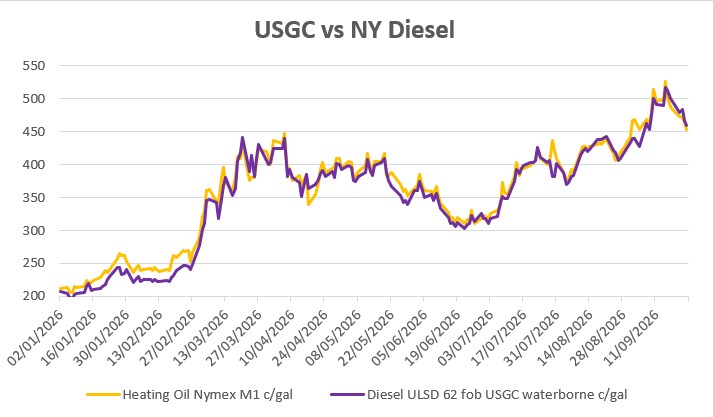 |
Now, the easy solution would be for NYMEX futures to price higher than ICE gasoil to win those barrels but here is where paper markets and the physical marketing of refined products clash. For example, the export market doesn’t use NY Harbor for export pricing, but a more localized marker for PADD3, with its own supply and demand dynamics, different marketing timing, etc… but let’s suppose it does punch well above the other competing destinations, there are still some other things to consider.
Refined products from the USGC are a particular market, where I’d say 70% of the volumes exported are under year-long term deals, (ie..the Pemex gasoline trade known as PMI), of those current 1.6Mnbpd, half are from term deals, you can’t touch those. The rest is sold spot to fuel distributors, state-owned or not, and traders like Vitol and Trafigura to resell wherever they want, and here is the thing: incentives. These traders don’t own the full supply chain in the US, especially the most profitable part, which is retail (service stations). Traders would rather push those barrels to their own petrol stations (we have seen Vitol shipping gasoil from the US to Australia) because this is the part of the fuel chain where they have a dominant position in some of these smaller markets… they would never make that kind of money in NY Harbor.
This is kind of what has been discussed with big oil people, to stop selling to these guys and supply their own network in the Northeast, and here is the root cause…
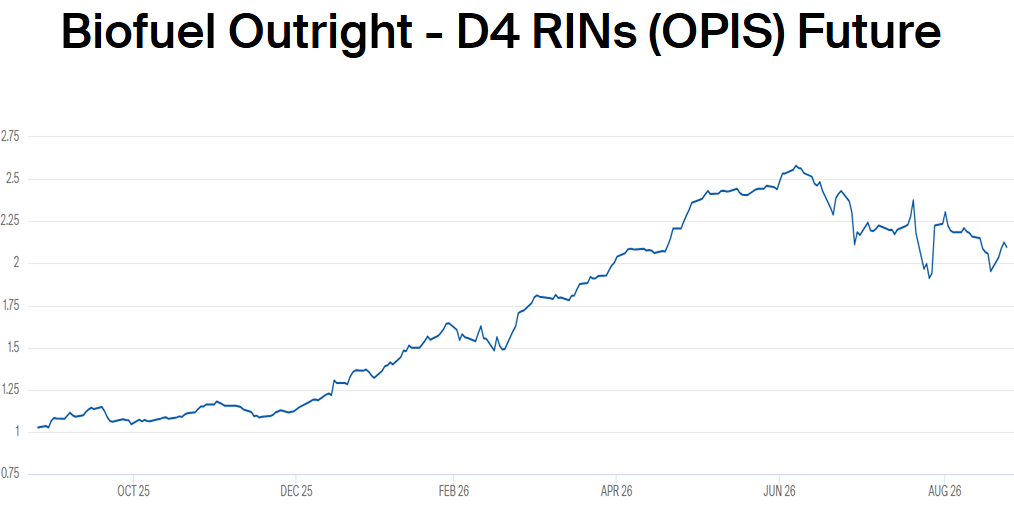 |
When you sell or import fuels into the US you have to blend or pay the credits (RINS) that for biodiesel have doubled this year. In part for the increased mandates for 2026, in part because bio/renewable production was unprofitable (now with these RIN prices it is), but the thing is these costs eat into your gross refined margins. Refiners on the Gulf Coast in order to show outsized metrics like refining margins, would prefer to export it out and be exempt from the “tax”, instead of paying it and recovering it months later from the fuel chain.
Now, the biodiesel industry has the price signal to increase production and most probably RIN prices have already peaked, but not fast enough to incentivize blending into the domestic pool, not before November anyway, so the solution should come from this corner of the market, forfeiting or pushing forward compliance deadlines (as they did for 2025 calendar year) can make refiners and blenders shift to the domestic market… we don’t need an export ban.
Implications
It’s impossible to quantify it but a diesel export ban would certainly build distillate stocks in PADD3 that will later show up in NY Harbor, reducing the price and putting the curve in contango but I’m not sure it will reduce refining runs meaningfully. ULSD would have to drop to $2.5/gal for refiners to start losing money, there is a lot of leeway in these $100 cracks… and 500kbd for 90 days won’t do much damage. There might be a shift towards Jet production if that is not banned either, but for the next 90 days, (if temporal), crude has been already bought and linear programing has been done at the refineries, they don’t have much choice…
In the international markets, ICE Gasoil and Sing gasoil will rip, everyone will scramble for diesel and clean tankers, but the biggest losers are the very same US refiners. There is no force majeure here, so if they have a term deal, they will have to fulfil it from elsewhere, pay international prices while their sale price is pegged to Platts USGC ULSD. That could be catastrophic for the Exxons and Valeros out there. They are encouraged to find a middle ground, so this export ban is not likely… but we have been surprised by this Administration before…...
Subscribe to Oil not dead to unlock the rest.
Become a paying subscriber of Oil not dead to get access to this post and other subscriber-only content.
A subscription gets you:
| Oil Weekly Commentary | |
| A custom App and chat | |
| We might start doing webinars |
| ||||||||||


